
 Did you know there are approximately half a million children in foster care in the United States? There is an enormous need for families to serve this foster child population . . . and it doesn’t necessarily require a full-time commitment.
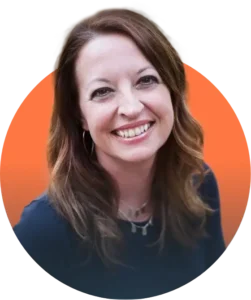
Today I am excited to interview a wonderful Christian mom who is serving the Lord in this way. Jennifer is a homeschooling mom of three biological children, ages 7, 6 and 4 months. She is also a foster mom of a one-year-old baby who was placed with her family at 10 days old. She has an amazing heart for the fostering ministry and I pray that her story will encourage you to consider how your own family might make a difference to foster children in need.
If you have any questions for Jennifer about fostering or her experience, please leave them in the comments!
What led you to fostering?
My husband, Raymond, and I have always placed a high value on the importance of family. Before we got married, we both felt a tug in our hearts to help children in need. At the time we thought working with street children or orphans overseas might be a part of God’s plan for us, but when we learned that our oldest child had special needs that could not be met overseas, we began to look for other ways to get involved in ministry with children in need here in the U.S.
I started asking Raymond about foster care once we got over the shock of my son’s diagnosis of autism. Raymond was hesitant, so I let the subject go. About a year later, he saw an ad for foster parenting in a local magazine (like the kind you get at Subway!) and asked me if I thought we should go to the orientation later that month. Of course I said yes! That was the way (logistically) we got into fostering.
Spiritually, I really believe that foster parenting is a calling, and I believe that the Lord had planted a seed of compassion in our hearts long ago both for children in general and for foster children, and that seed is just now coming to fruition. Who knows what else He has in store for our lives or for the lives of those children whom we invite into our homes?
If you were to summarize your fostering experience to date overall, what would you say?
I have never felt more like I was doing what I was called to do. I would say that foster parenting is one of the most rewarding, yet gut-wrenching experiences I have been through. We have a lot to learn, but we are open and willing to let the Lord use us and teach us as we care for these little ones.
How has fostering impacted the parenting of your other children, both positively and negatively?
As I mentioned, we have a child with special needs already and when we started considering foster care, we were concerned about how he would react to having new children in and out of the home, and also about what kind of placement would fit the best with our family dynamics. Many people are so eager to help that they don’t limit what kind of child they will take. The problem with that is that not every child will mesh with every family. It’s important to have a conversation about what kinds of children you are willing to bring into your home, and what kinds of placements may not be appropriate for your situation. For example, if you are a working mom, taking in a child with a lot of medical needs may not be appropriate for your situation. Or, if you have very young children, taking in a child who has a history of aggression may not be appropriate. For us, we had very specific (and some would say limiting) parameters as to what type of child we would agree to care for.
Because the Lord gave us the insight to have this conversation before having a child come into our home, our fostering experience has overall had a very positive impact on our children. Our foster child has brought out an empathy and openness in our autistic biological child that we had never seen before. I really believe that having the experience of seeing us care for a helpless infant with so many needs drew him out and into relationship all the more.
Logistically, fostering has impacted our lifestyle in that we have to accept having an “open home” where people from the Department of Human Services (DHS), our fostering agency, etc., regularly come to visit. We have rules that we must follow and several trainings we have to make time for. That has been an adjustment. We also have had to learn how to attach to our foster child while at the same time accept that she is NOT ours and ultimately we have very little control over her future. I suppose some of these things can be considered negative, but I’m not one to look at experiences as strictly negative or positive – they are more just opportunities for learning and growth.
How has your foster baby been received by your other children? Have you done anything “special” to encourage the relationship between all of your kids?
We have only had one placement, but so far she has been well received. We have raised her from infancy, and my children look at her like their biological sibling.
It’s so important that your biological children know that your foster child has a mom/dad/family of his or her own, as well as being a part of your family. You don’t want your children thinking that the foster child will always be with you because the truth is that in most cases the foster children you care for will eventually go on to live elsewhere. You also need to teach your kids to respect the family of the foster child, whether that be in conversations or when actually meeting and spending time with the birth family.
How has fostering impacted your faith?
One thing fostering does is show you how little control you really have. Our foster daughter is like my own daughter in many ways. But the reality is that I have very little control of how long she will be with us or where she goes or if she leaves our home. Every couple of months we have a court date and the judge rules as to her placement and her birth mother’s parenting plan. Also, any relative who comes forward who is fit to foster her would mean that she would be leaving our home. You have to learn very quickly to lean on God. Our mantra is “God knows.” We look at the judges’ rulings, at the birth mom’s decisions, at the social worker’s plans and all we can do is lift our hands and remember that God knows and loves these precious children and we have to trust that he will protect them much better than we can.
What are common misconceptions about fostering?
I think some of the typical misconceptions are that 1) people do it for the money, 2) people collect kids and treat them badly and 3) only a certain “class” of people do foster care. I think those are all perpetuated by negative media stories, though of course there are people who really shouldn’t be fostering or who are doing it poorly.
Beyond that I think one of the big misconceptions is that “If I don’t do it, someone else will.” This is just not true. In our state, there are 9,300 foster children. The number has risen by something like 1,000 since January. Our shelters (which is where foster children go while workers look for foster parents) are full. All of the foster homes are full. All of the emergency homes are full. And some children spend the night in the DHS office on a cot waiting for a home to take them. The truth is that there just aren’t enough foster parents for the need.
Another misconception is that you have to be a foster parent to help foster children. This is not true. You can become a respite provider, taking foster kids when foster families need a break or go on vacation. You can do only emergency care and have kids in your home only a short while. You can be an alternate caregiver (basically a certified babysitter for foster kids). You can donate toys and clothing for foster kids. There is so much you can do without making a full-time commitment.
Based on your experience, what are the key questions a family needs to consider before pursuing fostering?
- Can I handle the emotional ups and downs of not knowing how long a particular child will be in my care?
- Can I attach to a child knowing they may leave my home in a short time?
- Can I handle a child with special needs (whether that be attachment issues, medical, emotional or other)? What level of needs can I handle?
- Is my lifestyle conducive to fostering? Can I make time for transporting to visits (some states will transport for you), medical appointments, school, etc.?
- Can I respect the birth family and do my best to help them connect with their child even when their parenting or lifestyle choices may be offensive to me?
- What will I do if the child in my care becomes available for adoption?
- What kind of placement (age, gender, personality, type of abuse they have suffered) am I willing/able to care for?
- What things could I absolutely not handle? For example, we would not take sexual abuse cases because we feel that we could not support reunification (reunification means returning the child to his/her birth parents). We also won’t take HIV positive children because we have young children and it’s difficult to take universal precautions.
- How many kids could I handle (if you have multiple kids from multiple families, you will have visits for each on different days)?
If someone is interested in fostering, where do you suggest they start to learn more and take next steps?
You could start just by going to your state’s Department of Human Services website. You can simply Google “your state, foster parenting” and find many resources. We personally went with a contracting agency, so you can also look up “your state or county, foster care, agency”. There will be numbers you can call and classes you can attend to learn more!
If you have any questions for Jennifer about fostering or her experience, please leave them in the comments!